Blog ·
How to give cover-art feedback that changes the next direction
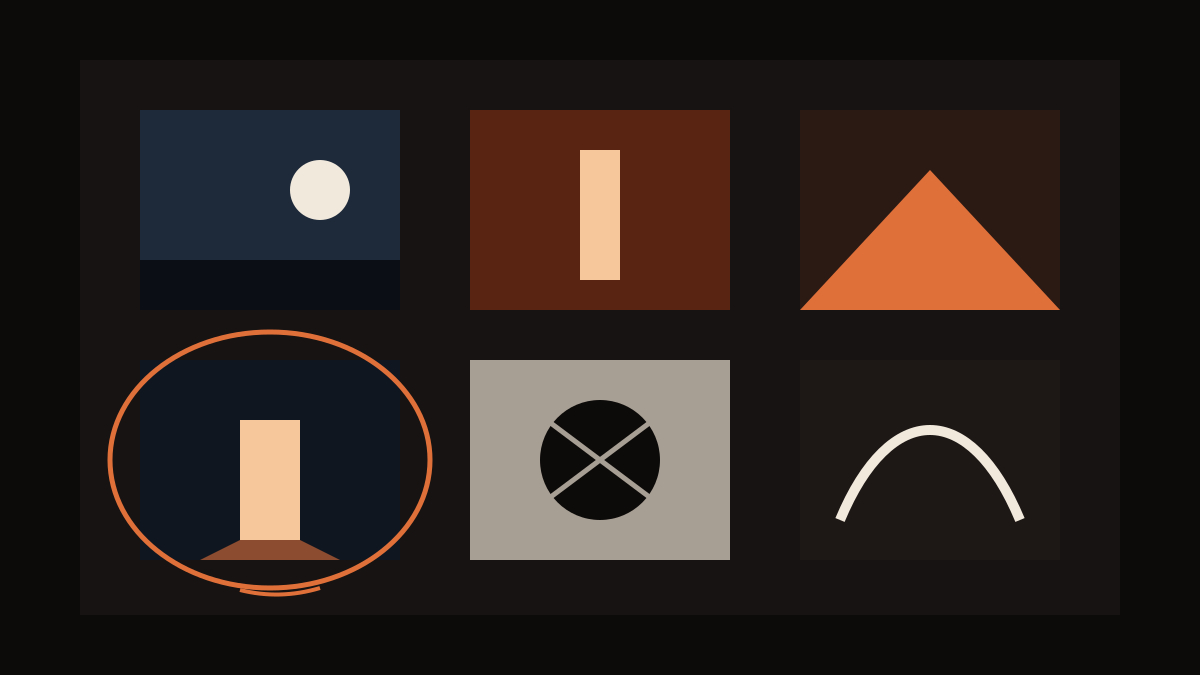
Most cover feedback fails for the same reason: it describes a feeling about the picture instead of a decision about it. "More emotional", "more premium", "it feels generic" are honest reactions, but whoever makes the next version, a designer, a friend or a tool, has to guess what to change. Good feedback says what to keep, what to change, what to avoid, and why.
Three layers: meaning, composition, treatment
Before you write anything, decide which layer your reaction is about.
- Meaning: what the picture is about. The subject, the situation, the idea. "This is about leaving; the song is about staying."
- Composition: where things are. Size of the subject, framing, how much empty space, where the eye lands first.
- Treatment: how it is rendered. Colour, light, texture, photographic or painted, clean or grainy.
Mixing the layers is what makes feedback confusing. "It doesn't feel right, maybe darker?" could mean the idea is wrong (meaning) or the lighting is wrong (treatment). They lead to completely different next versions. Fix meaning first: there is no point perfecting the light on the wrong idea.
Keep, change, avoid, because
Write every note in four short parts:
Keep:    ______________________
Change:  ______________________
Avoid:   ______________________
Because: ______________________
An illustrative example, for an invented song about a friend arriving late at night:
Keep:    the open doorway and the cold street around it
Change:  the light from the door, cool white → warm amber
Avoid:   adding a figure in the doorway
Because: the song is the invitation, not the person
"Keep" protects what is already working, which matters more than people expect: without it, the next version often loses the one good thing. "Because" lets the person making changes solve the problem better than you described it.
Turning vague words into decisions
When you catch yourself using one of these words, ask what you actually saw.
| You wrote | Ask yourself | A concrete decision | |---|---|---| | More emotional | Which feeling, and is it missing from the idea or the look? | "The song is tender; the subject is too far away. Bring it closer." | | More premium | What do expensive-looking covers you like have in common? | "Fewer elements, more empty space, one material shown in detail." | | Generic | Generic how: the subject, or the style? | "Any song could have a sunset. Use the kitchen from verse two." | | Too busy | What should the eye see first? | "Keep the window, remove the plants and the second light." |
One meaningful change at a time
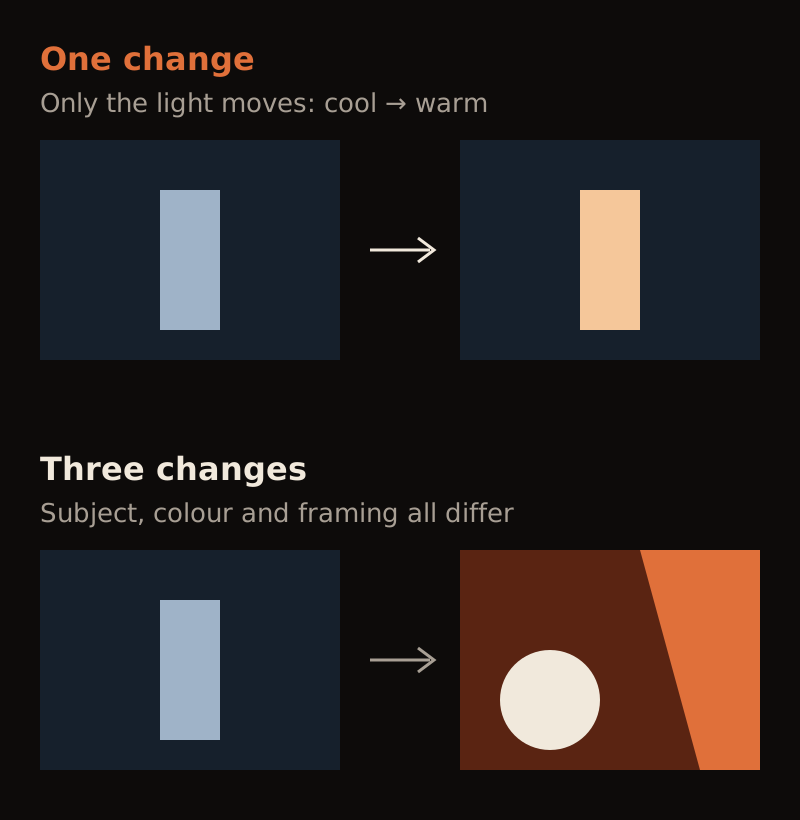
If you ask for a new subject, new colours and a new crop at once, and the result is better, you do not know which change helped. If it is worse, you do not know which to undo. Change one layer per round. Two small changes on the same layer are usually fine; three changes across three layers is a new direction, not a revision.
When to stop
Revisions can go on forever. Decide in advance what "done" means:
- The cover is about the song, and you can say how in one sentence.
- It reads at phone size: check it in a grid with our phone check.
- Your last two rounds were treatment-only, and you could not choose between them a day later.
If all three are true, stop and pick. Further rounds tend to trade one small preference for another.
If you keep having to fix the meaning, go back a step. Our guide to what cover art should show helps decide the subject before anyone draws it.
Copy this feedback card
Layer this note is about: meaning / composition / treatment
Keep:
Change (one thing):
Avoid:
Because:
Done when:
Using it in Soundae
In Soundae you can Keep or Pass each cover and describe what to change in your own words; a keep/change/avoid/because note gives that request something specific to work with. The next result is a new attempt, not a guaranteed exact edit, so judge it against your note. Start with your song.